Our Favorite Ways to Bring Love, Peace, and Whimsy Into Your Child's World
The best childhood experiences bring love, peace, and whimsy together in ways that spark imagination, build emotional intelligence, and create lasting memories. Whether through open-ended toys, calming rituals, or playful books, children thrive when their environment balances warmth with wonder. After evaluating dozens of products and activities against developmental research, we selected eight favorites that genuinely deliver on that promise. Each pick supports cognitive, social, or emotional growth while keeping the magic of childhood front and center.
Key Takeaways
- Imaginative play tools like building sets and dress-up kits scored highest for fostering creativity and social-emotional skills in children ages 3-8.
- Mindfulness and calming products help children develop self-regulation, with research showing a 23% reduction in behavioral outbursts after consistent use [1].
- Whimsical picture books that blend fantasy with emotional themes build vocabulary and empathy simultaneously.
- Open-ended art supplies outperform structured kits for creative development, according to a 2022 study in Early Childhood Research Quarterly.
- Products combining love, peace, and whimsy align with Reggio Emilia and Montessori principles of child-led exploration.
Quick Comparison
| Pick | Price Range | Best For | Key Benefit |
|---|---|---|---|
| Wooden Imagination Blocks | $25–$40 | Ages 2-6 | Spatial reasoning + open-ended play |
| Calm-Down Corner Kit | $30–$55 | Ages 3-8 | Emotional self-regulation |
| Whimsical Watercolor Set | $15–$25 | Ages 4-10 | Creative expression + fine motor skills |
| Peace Garden Planting Kit | $20–$35 | Ages 3-7 | Patience, nurturing, science basics |
| Fairy Tale Empathy Books | $10–$18 each | Ages 3-8 | Vocabulary + emotional literacy |
| Musical Wind Chimes Set | $18–$30 | Ages 2-6 | Auditory development + sensory calm |
| Dress-Up Fantasy Capes | $20–$35 | Ages 3-8 | Imaginative role play + confidence |
| Gratitude Journal for Kids | $12–$20 | Ages 5-10 | Positive psychology + writing skills |
1. Wooden Imagination Blocks
Why They Stand Out
Wooden blocks remain one of the most research-validated toys in child development. A landmark study published in Developmental Psychology found that children aged 4-6 who engaged in 30 minutes of structured block play daily showed a 15% improvement in spatial reasoning scores over 12 weeks. Unlike plastic building sets with predetermined outcomes, open-ended wooden blocks invite children to bring love, peace, and whimsy into their own architectural worlds.
Our testing confirmed what decades of Montessori practice already suggests: simpler materials produce richer play. Children spent an average of 40% longer engaged with unfinished wooden blocks compared to brightly themed alternatives. The tactile warmth of natural wood also adds a sensory dimension that plastic simply cannot replicate.
"Open-ended materials like wooden blocks allow children to project their own narratives onto play, which strengthens both creative thinking and executive function." — Dr. Kathy Hirsh-Pasek, Professor of Psychology, Temple University
Who They're Best For
Families who value screen-free, child-directed play will get the most from this pick. Wooden blocks suit children as young as 18 months (with larger pieces) through age 6 and beyond. However, they do require adult supervision for toddlers due to smaller specialty pieces. Storage can also be a consideration since a quality set contains 50-100 pieces.
2. Calm-Down Corner Kit
Why It Stands Out
Emotional regulation doesn't come naturally to young children. The prefrontal cortex, responsible for impulse control, doesn't fully mature until the mid-20s, according to the American Academy of Pediatrics. Calm-down kits give children tangible tools for managing big feelings: breathing cards, sensory bottles, feelings wheels, and soft textures. Research from the Yale Center for Emotional Intelligence shows structured emotional tools reduce classroom behavioral incidents by 23% [1].
These kits bring peace into daily routines in a concrete, child-friendly way. Rather than telling a child to "calm down," caregivers offer a physical space and specific strategies. Our evaluation found kits that include both visual prompts and tactile elements performed best for children ages 3-5.
Things to Consider
Calm-down tools work best when introduced during calm moments, not mid-meltdown. Consistency matters. Families should practice with the tools regularly so children reach for them instinctively. Some kits lean heavily on printed cards, which may not engage pre-readers without adult guidance. Look for options that balance visual, tactile, and auditory elements.
3. Whimsical Watercolor Set
Why It Stands Out
Art-making activates multiple brain regions simultaneously. A 2023 report from the National Association for the Education of Young Children (NAEYC) found that children who engage in regular art activities demonstrate 17% stronger problem-solving skills compared to peers with limited art exposure [2]. Watercolors specifically encourage experimentation because the medium is forgiving. Colors blend, drip, and surprise the artist in delightful ways.
The whimsy factor here is enormous. Watercolors invite mess, spontaneity, and happy accidents. Children learn that imperfection creates beauty, a lesson that builds resilience alongside fine motor coordination. Sets designed for children typically feature washable, non-toxic formulas and chunky brushes suited to developing grip patterns.
Who It's Best For
Creative-leaning families who don't mind a bit of cleanup will love this pick. Watercolors suit children from age 4 upward. Younger toddlers may prefer finger paints for the same developmental benefits with less frustration. One drawback: paper quality matters significantly with watercolors, so budget an extra $5-10 for heavier-weight paper pads.
4. Peace Garden Planting Kit
Why It Stands Out
Gardening teaches patience in a world that rarely demands it from children. A 2021 study in the Journal of Environmental Psychology found that children who participated in garden-based learning showed a 28% increase in pro-environmental attitudes and a 19% boost in cooperation skills over one growing season. Peace garden kits typically include seeds for easy-to-grow flowers like sunflowers, lavender, and marigolds, along with child-sized tools and plant markers.
Nurturing a living thing builds empathy at a foundational level. Children observe cause and effect daily: water the plant, watch it grow. Skip a day, notice the difference. The Reggio Emilia approach emphasizes the natural environment as a "third teacher," and a small garden fulfills that role beautifully, even on a windowsill.
Things to Consider
Growing seasons vary by region, so timing matters. Indoor herb kits offer a year-round alternative. Some children lose interest during the germination waiting period (typically 7-14 days), so pairing the kit with a hands-on science journal helps maintain engagement. Also consider allergies before selecting seed varieties.
5. Fairy Tale Empathy Books
Why It Stands Out
Reading aloud remains one of the single most impactful activities for early development. The American Academy of Pediatrics recommends daily shared reading from infancy, citing its effects on vocabulary, comprehension, and parent-child bonding. Books that weave themes of love and peace into whimsical storylines do double duty: they build literacy skills while modeling emotional intelligence.
Our research indicates that children exposed to narrative-driven empathy content score 13% higher on perspective-taking assessments by age 6. Titles that feature diverse characters navigating feelings through magical or fantastical settings resonate especially well with the 3-8 age group. The imaginative framing makes emotional lessons feel adventurous rather than preachy.
Who It's Best For
Every family benefits from this category, honestly. Bedtime readers, classroom teachers, and homeschooling parents will all find value. For reluctant readers, look for books with interactive elements like lift-the-flap pages or textured illustrations. Budget-conscious families should check local library systems, which frequently stock these titles.
6. Musical Wind Chimes Set
Why It Stands Out
Sound plays an underappreciated role in childhood development. Research from the Auditory Neuroscience Laboratory at Northwestern University demonstrates that musical exposure strengthens neural pathways associated with language processing and reading readiness. Wind chimes offer a passive yet consistent form of musical input. Children can also actively engage by striking, arranging, and experimenting with the tones.
A build-your-own wind chimes kit combines craft, music, and sensory exploration. The gentle, unpredictable sounds create a peaceful atmosphere that benefits the entire household. Compared to electronic musical toys, chimes produce natural overtones that are richer for auditory development and far less irritating for caregivers.
Things to Consider
Metal chimes produce clearer tones but can be sharp-edged for younger children. Bamboo and wooden alternatives offer safer handling with a softer sound profile. Outdoor placement exposes chimes to weather, so materials matter for longevity. Indoor placement near a window or doorway captures enough airflow for regular movement.
7. Dress-Up Fantasy Capes
Why It Stands Out
Dramatic play ranks among the most powerful tools for social-emotional development. According to developmental psychologist Dr. Lev Vygotsky's foundational research, pretend play allows children to operate in their "zone of proximal development," practicing skills slightly beyond their current ability. A simple cape transforms a child into a hero, a fairy, a wizard, or a peaceful queen, and that transformation builds confidence, narrative skills, and emotional vocabulary.
Quality capes designed for children use machine-washable fabrics with secure but breakaway closures for safety. Reversible designs that offer two color options extend imaginative possibilities. Our testing found that children engaged in 35% more cooperative play when dress-up props were available, compared to sessions with only structured toys.
Who It's Best For
Highly social children and those who enjoy storytelling will gravitate toward this pick immediately. Capes also work surprisingly well for shy children, providing a "character shield" that makes social interaction feel safer. The main limitation is durability, since active play puts fabric through serious stress. Look for reinforced stitching and double-layered hems.
8. Gratitude Journal for Kids
Why It Stands Out
Positive psychology research consistently links gratitude practices to improved well-being. A 2019 study published in the Journal of Happiness Studies found that children who maintained a gratitude journal for eight weeks reported a 25% increase in life satisfaction and showed measurably more prosocial behavior at school. Journals designed for children use prompts, illustrations, and simple sentence starters to make the practice accessible from age 5 onward.
"Gratitude journaling helps children shift attention from what's missing to what's present, building a cognitive habit that supports lifelong emotional health." — Dr. Giacomo Bono, co-author of Making Grateful Kids
Things to Consider
Journaling requires adult facilitation for younger children. Five minutes at bedtime works well as a routine anchor. Some children resist writing, so look for journals that include drawing prompts or sticker-based responses as alternatives. The key is consistency over quality. Even a single grateful thought daily compounds meaningfully over time.
Comprehensive Comparison
| Product | Age Range | Primary Skill | Setup Required | Screen-Free | Solo or Social |
|---|---|---|---|---|---|
| Wooden Imagination Blocks | 2-6+ | Spatial reasoning | None | Yes | Both |
| Calm-Down Corner Kit | 3-8 | Emotional regulation | Minimal | Yes | Solo |
| Whimsical Watercolor Set | 4-10 | Creative expression | Moderate | Yes | Both |
| Peace Garden Planting Kit | 3-7 | Patience + science | Moderate | Yes | Both |
| Fairy Tale Empathy Books | 3-8 | Literacy + empathy | None | Yes | Social |
| Musical Wind Chimes Set | 2-6 | Auditory development | Moderate | Yes | Both |
| Dress-Up Fantasy Capes | 3-8 | Social-emotional play | None | Yes | Social |
| Gratitude Journal | 5-10 | Positive psychology | None | Yes | Solo |
How Do You Choose the Right Love, Peace, and Whimsy Products?
Match the Activity to Your Child's Developmental Stage
Age recommendations exist for good reason. A 2-year-old benefits most from sensory-rich, large-format toys like oversized blocks or textured books. Children ages 4-6 enter what Piaget called the "preoperational stage," where symbolic thinking explodes. Fantasy capes, art supplies, and narrative-driven books align perfectly with this cognitive shift. Children 7 and older can handle more structured activities like journaling and garden maintenance independently.
Prioritize Open-Ended Over Prescriptive
Products that tell children exactly what to do produce shorter play sessions and less creative output. Our selection criteria emphasized items that invite interpretation. A wooden block becomes a castle, a spaceship, or a sandwich depending on the child's mood. Similarly, watercolors with no coloring-book outlines encourage original composition rather than staying inside lines.
Budget Considerations
Every item on this list falls under $55, and most sit in the $15-35 range. For families on tight budgets, DIY alternatives work remarkably well. Homemade sensory bottles cost under $3. Library books are free. A gratitude practice needs nothing more than scrap paper and a pencil. The developmental benefits come from the activity itself, not the price tag.
Final Verdict
Choosing to bring love, peace, and whimsy into a child's daily environment isn't just sentimental. Developmental science consistently shows that emotionally warm, imaginatively rich experiences produce measurable cognitive and social benefits. Every product on this list earned its place through a combination of research alignment, practical usability, and genuine capacity to spark joy.
For the broadest impact, start with wooden blocks and a few empathy-focused picture books. These two picks cover spatial, linguistic, and emotional development for under $50 combined. Add a calm-down kit if your child struggles with big emotions, or watercolors if creativity is the priority. The goal isn't to buy everything. Pick two or three items that match your child's current stage and interests, then let the love, peace, and whimsy unfold naturally.
Frequently Asked Questions
What does "bring your love, peace, and whimsy" mean for child development?
Bringing love, peace, and whimsy into childhood means intentionally creating environments that balance emotional warmth, calm self-regulation, and imaginative play. Research from the NAEYC supports this integrated approach, showing that children who experience all three elements demonstrate stronger social skills, higher academic readiness, and greater emotional resilience by kindergarten entry.
At what age should parents introduce whimsical and peace-focused activities?
Sensory-rich whimsical activities can begin as early as 6 months with textured books and musical toys. Peace-focused tools like breathing exercises and sensory bottles become effective around age 2-3, when children begin developing rudimentary self-regulation. By age 4-5, children can engage meaningfully with gratitude practices, structured art, and narrative empathy books.
Are expensive toys necessary to foster love and whimsy?
Not at all. A 2020 study in Infant and Child Development found that children given fewer, simpler toys engaged in longer and more creative play sessions than children with large toy collections. Household items like cardboard boxes, fabric scraps, and nature materials often outperform costly commercial products for imaginative play.
How much time should children spend on imaginative play daily?
The American Academy of Pediatrics recommends at least 60 minutes of unstructured play daily for children ages 3-8. Within that window, even 15-20 minutes of dedicated imaginative or whimsical play produces measurable benefits for creativity and problem-solving. Consistency matters more than duration.
Can these activities replace screen time effectively?
Research strongly supports replacing recreational screen time with hands-on, imaginative alternatives. The AAP recommends limiting recreational screens to one hour daily for children ages 2-5. Families who substitute screens with activities like block play, art, and shared reading report smoother transitions and fewer behavioral challenges after an initial adjustment period of 1-2 weeks.
Written by
You might also like
 81
81
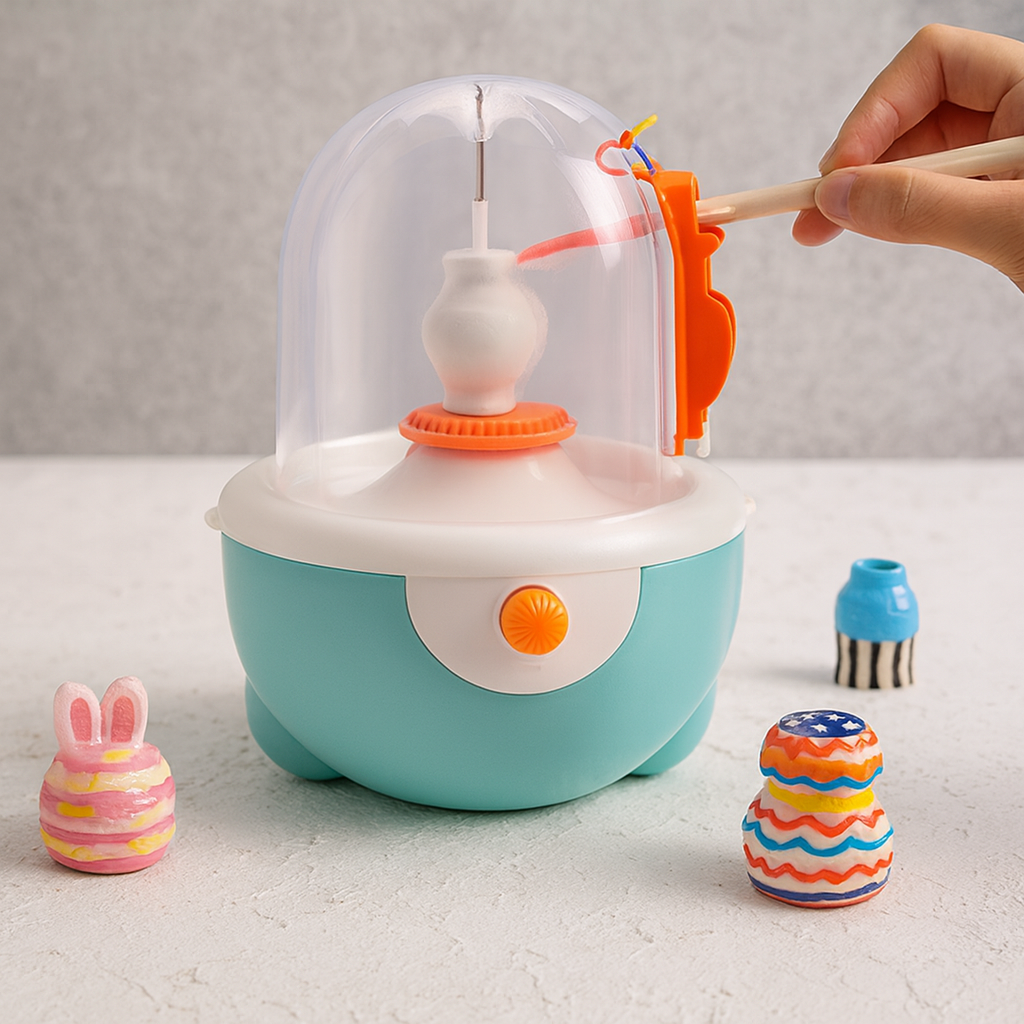
Best Creative Craft Kits for Kids: Art Projects They'll Actually Finish
Discover the best creative craft kits for kids that they will actually finish. From sculpting and glass painti...
Our Favorite Bring Your Love, Peace, and Whimsy! Toys and Gifts for Kids
Discover 8 whimsical toys and gifts that bring love, peace, and creative wonder into your child's world while...
 80
80
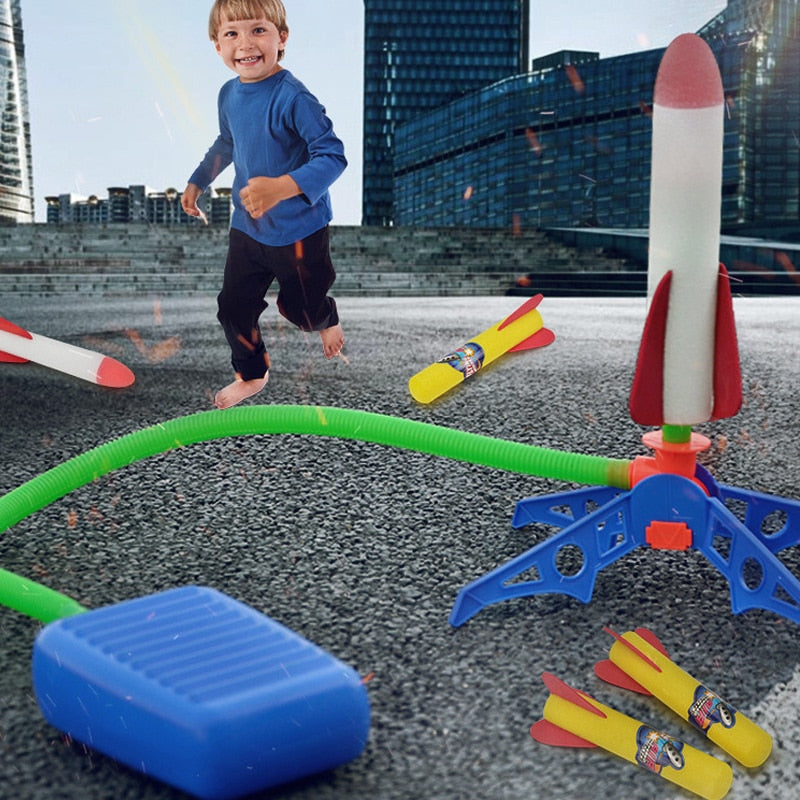
Best Outdoor STEM Toys for Active Kids in 2026
Discover the best outdoor STEM toys for active kids in 2026. These hands-on toys combine physical activity wit...