Nature-Based Learning: How Outdoor Education Improves Academic Performance
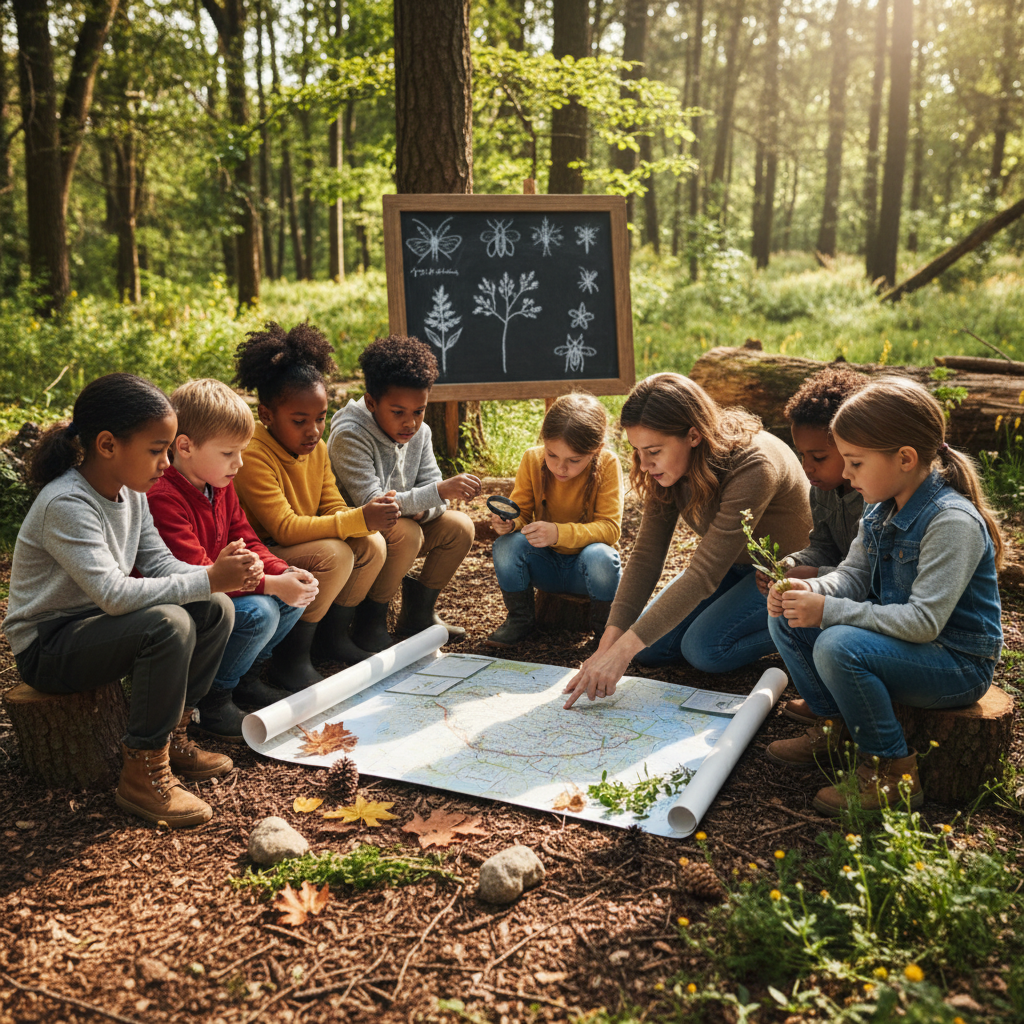
The evidence is mounting: outdoor education improves academic performance in measurable, significant ways. Nature-based learning is not a retreat from rigor but an enhancement of it. From improved test scores to better attendance and reduced behavioral issues, taking education outside produces results that conventional classrooms struggle to match.
The Research Behind Nature-Based Learning
A landmark 2019 study by Dr. Ming Kuo of the University of Illinois analyzed 119 published studies on the relationship between nature and academic outcomes. The conclusion was unequivocal: exposure to nature improves academic performance across all age groups, demographics, and geographic regions. The effect sizes were moderate to large, comparable to the impact of evidence-based teaching interventions that schools invest millions to implement.
Specifically, students who participated in outdoor education programs showed an average improvement of 27 percent on standardized science tests, 20 percent improvement in reading and language arts, and notable gains in math and social studies. These gains persisted beyond the outdoor education period, suggesting that nature-based learning creates lasting cognitive changes rather than temporary boosts.
How Nature Enhances Learning
Attention Restoration
Attention Restoration Theory, developed by psychologists Rachel and Stephen Kaplan at the University of Michigan, explains why nature rejuvenates cognitive function. Indoor environments, especially classrooms with fluorescent lighting and constant low-level noise, tax directed attention. Natural environments engage a different type of attention called "soft fascination," allowing directed attention circuits to rest and restore. Students who spend time in nature return to focused tasks with measurably improved concentration.
Stress Reduction
Cortisol, the stress hormone, directly impairs learning by disrupting the hippocampus, the brain region responsible for memory formation. Multiple studies, including research from the University of Exeter, show that as little as 20 minutes in a natural setting reduces cortisol levels by 15 to 25 percent. Lower stress creates better conditions for memory encoding, creative thinking, and problem-solving, the cognitive skills that underpin academic success.
Multisensory Engagement
Outdoor environments stimulate all five senses simultaneously, creating richer, more memorable learning experiences. A science lesson about photosynthesis taught beside actual trees engages more sensory pathways than the same lesson taught from a textbook. Dr. David Sobel of Antioch University describes this as "place-based education," where learning is embedded in real, tangible contexts that make abstract concepts concrete and personally meaningful.
Physical Movement Integration
Outdoor learning naturally incorporates physical movement, which research from the Harvard Medical School shows increases levels of Brain-Derived Neurotrophic Factor (BDNF), a protein that supports the growth of new neurons and strengthens existing neural connections. Dr. John Ratey, author of "Spark: The Revolutionary New Science of Exercise and the Brain," calls exercise "Miracle-Gro for the brain." Outdoor education provides exercise as a natural byproduct of the learning environment.
Practical Ways to Incorporate Outdoor Learning
Nature Journaling
Give children a notebook and assign regular outdoor observation sessions. They can draw plants, track weather patterns, record bird sightings, or write descriptive paragraphs about natural phenomena. This single practice integrates science, art, writing, and observation skills.
Math in Nature
Natural environments provide endless math applications. Measure tree circumferences, calculate the area of garden plots, graph daily temperature changes, or explore Fibonacci sequences in pinecones and sunflowers. Math taught through natural contexts feels relevant and meaningful rather than abstract.
Reading Outdoors
Simply moving reading time outside can improve comprehension and enjoyment. The sensory-rich backdrop of a garden, park, or backyard reduces reading fatigue and creates positive associations with books. Many schools report that reluctant readers show more engagement when reading occurs in natural settings.
Science Exploration
Every outdoor space is a living laboratory. Observe insect behavior, study soil composition, track moon phases, identify cloud types, or monitor a small garden ecosystem over time. These direct observations build scientific thinking skills more effectively than textbook descriptions of the same phenomena.
Overcoming Barriers to Outdoor Education
Weather concerns are the most frequently cited barrier. The Scandinavian approach, summarized by the phrase "there is no bad weather, only inappropriate clothing," suggests that preparation rather than avoidance is the solution. Liability concerns can be addressed through reasonable safety protocols and risk assessments. Curriculum pressure can be alleviated by aligning outdoor activities with existing learning standards rather than treating them as add-ons.
The Equity Dimension
Access to nature varies significantly by socioeconomic status. Research from the Children and Nature Network shows that children in low-income neighborhoods have 28 percent less access to green spaces. Schools in these areas can compensate through schoolyard naturalization projects, partnerships with local parks, and indoor nature elements like plants, natural light, and nature imagery that provide partial benefits when outdoor access is limited.
Frequently Asked Questions
How much outdoor time is needed to see academic benefits?
Research suggests that 45 to 90 minutes of outdoor learning per week produces measurable academic improvements. However, even brief 15-minute outdoor breaks between subjects can restore attention and improve subsequent focus.
Does outdoor education work for all subjects?
While science and mathematics have the strongest research base for outdoor teaching, studies show benefits across all subjects including language arts, social studies, and even foreign languages. The attention and stress benefits of nature improve learning capacity regardless of content area.
Is outdoor education effective for children with ADHD?
Research from the University of Illinois found that children with ADHD who engaged in 20-minute walks in park settings showed attention improvements equivalent to the effects of ADHD medication. Outdoor learning environments are particularly beneficial for children whose attention challenges are exacerbated by traditional classroom confinement.
Can I practice outdoor education in an urban environment?
Absolutely. Urban parks, community gardens, schoolyards, rooftops, and even balconies provide nature exposure. Studies show that even small green spaces produce measurable cognitive benefits. Urban nature may include studying architecture, mapping neighborhoods, or observing urban wildlife like birds and insects.
Written by
You might also like
 81
81
Best Creative Craft Kits for Kids: Art Projects They'll Actually Finish
Discover the best creative craft kits for kids that they will actually finish. From sculpting and glass painti...
Our Favorite Ways to Bring Love, Peace, and Whimsy Into Your Child's World
From imaginative play sets to calming mindfulness tools, these are our favorite picks that bring love, peace,...
Our Favorite Bring Your Love, Peace, and Whimsy! Toys and Gifts for Kids
Discover 8 whimsical toys and gifts that bring love, peace, and creative wonder into your child's world while...