How to Develop Your Child's Emotional Intelligence: A Parent's Complete Guide
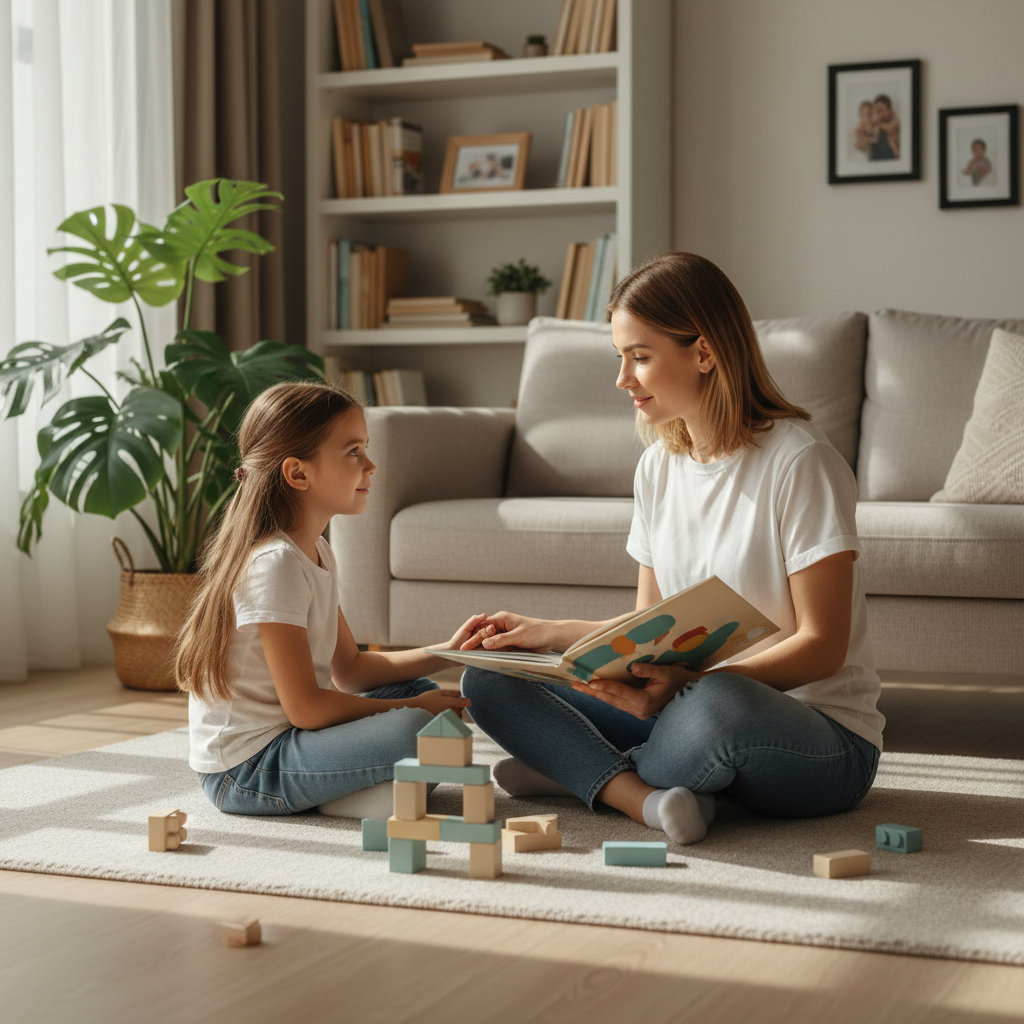
In an era where artificial intelligence can solve complex equations and write essays, the uniquely human skill of emotional intelligence has become more valuable than ever. Research consistently shows that developing your child's emotional intelligence is one of the most important things you can do for their long-term success and well-being. According to a landmark study by psychologist Daniel Goleman, emotional intelligence (EQ) accounts for nearly 90% of what sets high performers apart from peers with similar technical skills and knowledge. For children, strong emotional intelligence predicts better academic outcomes, healthier relationships, and greater mental health resilience.
What Is Emotional Intelligence and Why Does It Matter?
Emotional intelligence encompasses five core competencies identified by Goleman and refined by researchers at the Yale Center for Emotional Intelligence:
- Self-awareness: Recognizing and understanding one's own emotions
- Self-regulation: Managing emotions and impulses effectively
- Motivation: Harnessing emotions to pursue goals with energy and persistence
- Empathy: Understanding and sharing the feelings of others
- Social skills: Managing relationships and navigating social situations effectively
A 2025 meta-analysis published in Child Development reviewed 82 studies involving over 97,000 children and found that children with high emotional intelligence were 58% more likely to succeed academically, 42% less likely to experience behavioral problems, and 35% less likely to develop anxiety or depression. Dr. Marc Brackett, director of the Yale Center for Emotional Intelligence, states: "Emotional intelligence is not a luxury or a soft skill. It is the foundation upon which all other learning is built. A child who cannot manage their emotions cannot sit still long enough to learn to read."
Building Emotional Vocabulary: The First Step
Children cannot manage emotions they cannot name. Research from the University of California, Los Angeles shows that the simple act of labeling an emotion, what psychologists call "affect labeling," reduces the intensity of that emotion by activating the prefrontal cortex and dampening the amygdala's alarm response.
Practical strategies for building emotional vocabulary:
- Name emotions in real time: "I can see you are feeling frustrated because the blocks keep falling. That is really annoying." This validates the child's experience and teaches the vocabulary simultaneously.
- Read emotion-focused books: Books like The Color Monster, In My Heart, and When Sophie Gets Angry explicitly name and explore emotions. A 2024 study in Early Education and Development found that children who were read emotion-themed books three times per week showed a 40% increase in emotional vocabulary within two months.
- Use an emotions chart: Post a feelings chart with faces showing different emotions. Encourage your child to point to how they are feeling throughout the day. The RULER approach developed at Yale uses a "Mood Meter" that maps emotions along axes of pleasantness and energy.
- Model your own emotions: "I am feeling anxious about my meeting tomorrow. I am going to take some deep breaths to calm myself." When parents narrate their own emotional experiences and coping strategies, children learn that emotions are normal and manageable. According to Dr. John Gottman, author of Raising an Emotionally Intelligent Child, parental emotional modeling is the single most powerful predictor of a child's emotional competence.
Teaching Self-Regulation Skills
Self-regulation is perhaps the most challenging emotional intelligence skill for children to develop, because the prefrontal cortex, the brain region responsible for impulse control, is not fully mature until the mid-twenties. However, research shows that self-regulation can be strengthened significantly through practice, just like a muscle.
Evidence-based self-regulation strategies for children:
- Deep breathing techniques: Teach simple breathing exercises like "smell the flower, blow out the candle" for young children or "box breathing" (inhale for 4, hold for 4, exhale for 4, hold for 4) for older children. A 2025 study in Developmental Psychobiology found that children who practiced daily breathing exercises for eight weeks showed measurable reductions in cortisol levels and improved emotional regulation.
- The "calm-down corner": Create a designated space with soft pillows, stress balls, calming jars, and headphones with soothing music where children can go when they feel overwhelmed. This is not a punishment; it is a tool. Teach children to recognize when they need a break and to use the space proactively.
- The stoplight method: Red means stop and recognize your feeling. Yellow means think about your options. Green means choose a response and go. This simple framework gives children a concrete process for pausing between an emotional trigger and their reaction. The Collaborative for Academic, Social, and Emotional Learning (CASEL) recommends this approach as one of the most effective self-regulation tools for elementary-age children.
- Mindfulness practices: Age-appropriate mindfulness activities, such as body scans, guided imagery, or mindful listening exercises, build the neural pathways for attention and emotional awareness. A 2024 randomized controlled trial published in JAMA Pediatrics found that an eight-week mindfulness program reduced emotional distress in children by 27%.
Developing Empathy in Your Child
Empathy is not automatic; it develops through experience and practice. Neuroscience research has identified "mirror neurons" that activate when we observe others' emotions, but the translation of this neural mirroring into genuine empathy requires cultivation. Dr. Helen Riess, author of The Empathy Effect and a researcher at Harvard Medical School, identifies several practices that strengthen empathy in children:
- Perspective-taking conversations: "How do you think your friend felt when that happened? What might she be thinking right now?" These questions exercise the theory of mind, the cognitive ability to understand that others have thoughts and feelings different from one's own.
- Diverse stories and experiences: Exposing children to books, films, and real-world experiences that feature people from different backgrounds, abilities, and circumstances broadens their empathic range. A 2024 study in Reading Research Quarterly found that children who regularly read fiction developed stronger empathy skills than children who primarily read nonfiction, because fiction requires the reader to inhabit another person's mental and emotional world.
- Community service: Even young children can participate in age-appropriate service activities, such as making cards for nursing home residents, collecting food for a food bank, or helping a neighbor. These experiences make empathy concrete and actionable.
- Pet care: Caring for an animal teaches children to be attentive to another being's needs and emotional states. A 2025 study in Anthrozoos found that children who actively participated in pet care showed measurably higher empathy scores than children without pets.
Navigating Big Emotions: The Emotion Coaching Approach
Dr. John Gottman's research identified a parenting approach called "emotion coaching" that produces the strongest emotional intelligence outcomes. Emotion coaching involves five steps:
- Be aware of your child's emotion: Notice emotional cues before they escalate.
- Recognize the emotion as an opportunity for connection and teaching: Instead of dreading meltdowns, view them as teachable moments.
- Listen empathically and validate the feeling: "You are really angry that your sister took your toy. I understand that."
- Help the child label the emotion: "That feeling you have, where your face gets hot and you want to yell, that is anger."
- Set limits while exploring solutions: "It is okay to feel angry. It is not okay to hit. What else could you do when you feel this way?"
Gottman's longitudinal research found that children of emotion-coaching parents, compared to children of emotion-dismissing parents, demonstrated better physical health, higher academic achievement, stronger friendships, fewer behavioral problems, and greater emotional resilience. The differences were statistically significant and persisted through adolescence.
What to Avoid: Practices That Undermine Emotional Intelligence
Certain well-intentioned parenting habits can actually hinder emotional intelligence development:
- Dismissing emotions: "Stop crying, it is not a big deal" teaches children that their feelings are invalid, leading them to suppress rather than process emotions.
- Punishing emotional expression: Sending a child to their room for being angry teaches that anger is unacceptable, rather than teaching healthy ways to express it.
- Solving every problem: When parents immediately fix every frustration, children miss the opportunity to develop coping skills and resilience.
- Overprotecting from negative emotions: Sadness, disappointment, and frustration are essential emotional experiences. Children who never encounter difficulty cannot develop the emotional resilience to handle it later.
Developing emotional intelligence is a long-term investment that pays dividends across every dimension of your child's life. It does not require perfection or special training. It requires presence, patience, and the willingness to sit with your child in their emotional experiences rather than rushing to fix or dismiss them. Start with one practice from this guide today, whether it is naming emotions, practicing deep breathing, or simply asking "How are you feeling?" and truly listening to the answer. Over time, these small moments accumulate into the powerful emotional foundation your child needs to navigate an increasingly complex world.
Written by
You might also like
 81
81
Best Creative Craft Kits for Kids: Art Projects They'll Actually Finish
Discover the best creative craft kits for kids that they will actually finish. From sculpting and glass painti...
Our Favorite Ways to Bring Love, Peace, and Whimsy Into Your Child's World
From imaginative play sets to calming mindfulness tools, these are our favorite picks that bring love, peace,...
Our Favorite Bring Your Love, Peace, and Whimsy! Toys and Gifts for Kids
Discover 8 whimsical toys and gifts that bring love, peace, and creative wonder into your child's world while...