The Role of Free Play in Child Development: Why Unstructured Time Matters
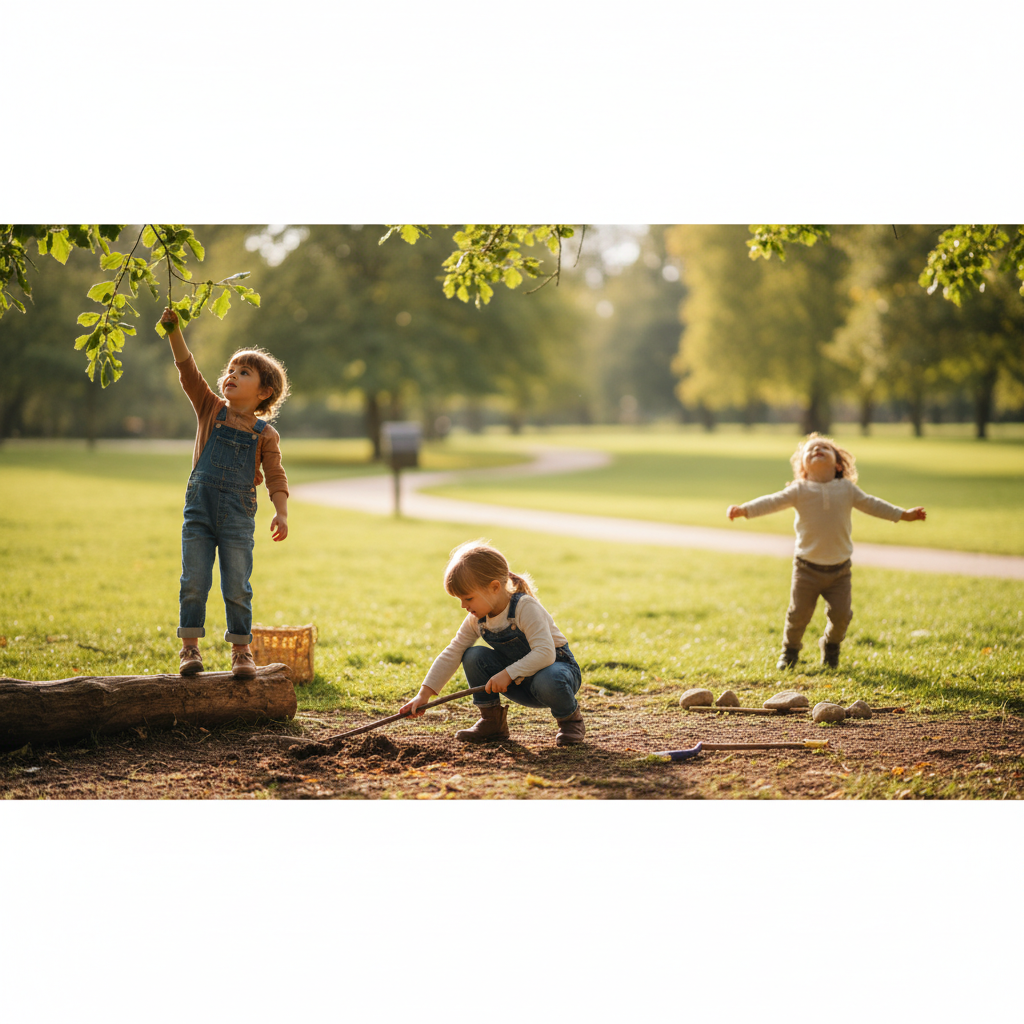
In an era of packed schedules and structured activities, free play in child development has become an endangered species. Yet decades of research confirm that unstructured playtime is not wasted time. It is one of the most powerful drivers of cognitive, social, and emotional growth. The American Academy of Pediatrics issued a clinical report emphasizing that play is essential to healthy brain development and should be protected in every child's daily routine.
What Is Free Play?
Free play is child-directed, unstructured activity with no predetermined outcome. It includes activities like building a fort from couch cushions, making up a story with action figures, splashing in puddles, or simply daydreaming. The key element is that the child initiates, directs, and controls the activity without adult instruction or evaluation.
Dr. Peter Gray, a research professor at Boston College and author of "Free to Learn," distinguishes free play from guided play and structured activities. "In free play, children are the authors of their own experience," he explains. "They set the rules, solve the problems, and navigate the social dynamics, all skills that cannot be taught through instruction alone."
Cognitive Benefits of Free Play
Research from the University of Colorado found that children with more unstructured time scored higher on measures of executive function, which includes planning, decision-making, and self-regulation. Free play requires children to create scenarios, establish rules, and solve problems in real time, all of which strengthen the prefrontal cortex.
A longitudinal study published in the journal Pediatrics tracked over 800 children from ages 3 to 12 and found that those with at least 45 minutes of daily free play demonstrated stronger creative thinking abilities and more flexible problem-solving strategies than peers with heavily structured schedules.
Social and Emotional Benefits
Free play, especially with peers, is where children learn to negotiate, compromise, share, and resolve conflicts. These social skills cannot be effectively taught through adult-led activities because they require authentic, child-driven social contexts. When children argue over the rules of a made-up game and resolve the disagreement themselves, they are building conflict resolution skills that will serve them for life.
Emotionally, free play provides a safe space for children to process experiences, express feelings, and build resilience. Dr. Stuart Brown, founder of the National Institute for Play, notes that children who engage in regular free play show lower levels of anxiety and greater emotional regulation compared to those with predominantly structured schedules.
Physical Benefits
Unstructured outdoor play develops gross motor skills, balance, and physical confidence in ways that organized sports often do not. Climbing trees, running through fields, and jumping over streams challenge children to assess risk, push their physical limits, and develop body awareness. The World Health Organization recommends that children ages 5 to 17 get at least 60 minutes of moderate to vigorous physical activity daily, and free outdoor play is one of the most enjoyable ways to achieve this.
How Much Free Play Do Children Need?
While there is no one-size-fits-all answer, most child development experts recommend at least one to two hours of unstructured play daily for preschool-age children and at least 45 minutes to one hour for school-age children. Dr. Michael Yogman, lead author of the AAP report on play, suggests that the quality of free play matters more than the exact duration. Even 30 minutes of truly unstructured, child-directed play is valuable.
Barriers to Free Play in Modern Childhood
Several factors have reduced free play time over recent decades. Academic pressure has pushed structured learning into younger ages and longer hours. Safety concerns have limited outdoor play and increased adult supervision. Screen time competes for attention that was once devoted to imaginative play. Overscheduled extracurricular activities leave little room for unstructured time.
Addressing these barriers requires intentional effort from parents. This means protecting blocks of unscheduled time, accepting that boredom is productive, and trusting children to manage their own play safely with age-appropriate boundaries.
Practical Tips for Encouraging Free Play
Schedule unscheduled time. It sounds paradoxical, but blocking out daily periods with no planned activities ensures free play happens consistently. Provide open-ended materials like cardboard boxes, art supplies, building blocks, and natural materials rather than toys with predetermined play patterns. Resist the urge to direct play. When your child says they are bored, wait. Boredom is the precursor to creativity. Limit screen time to create space that free play naturally fills. Play outside whenever possible, as outdoor environments offer richer sensory experiences and more physical challenges than indoor spaces.
Frequently Asked Questions
Is free play the same as recess?
Recess can be a form of free play if children are allowed to choose their own activities without adult direction. However, increasingly structured recess programs with organized games reduce the free play element. True recess lets children decide how to spend their time.
My child just watches TV when given free time. How do I redirect this?
Screen habits can crowd out free play. Gradually reduce available screen time and provide inviting alternatives. Leave out art supplies, building materials, or interesting objects. The transition may involve initial boredom, but children typically discover creative play within 15 to 20 minutes when screens are unavailable.
Is free play beneficial for children with ADHD?
Research suggests that free play, particularly outdoor play in natural settings, can reduce ADHD symptoms. A study from the University of Illinois found that children with ADHD who spent time in green outdoor spaces showed improved concentration afterward.
Should parents participate in free play?
Parents can be present without directing. Follow your child's lead, accept roles they assign you, and resist the urge to correct, optimize, or instruct. Your presence provides security while their direction ensures the play remains genuinely free.
Written by
You might also like
 81
81
Best Creative Craft Kits for Kids: Art Projects They'll Actually Finish
Discover the best creative craft kits for kids that they will actually finish. From sculpting and glass painti...
Our Favorite Ways to Bring Love, Peace, and Whimsy Into Your Child's World
From imaginative play sets to calming mindfulness tools, these are our favorite picks that bring love, peace,...
Our Favorite Bring Your Love, Peace, and Whimsy! Toys and Gifts for Kids
Discover 8 whimsical toys and gifts that bring love, peace, and creative wonder into your child's world while...