The Science of Creativity in Children: How Art Boosts Brain Development
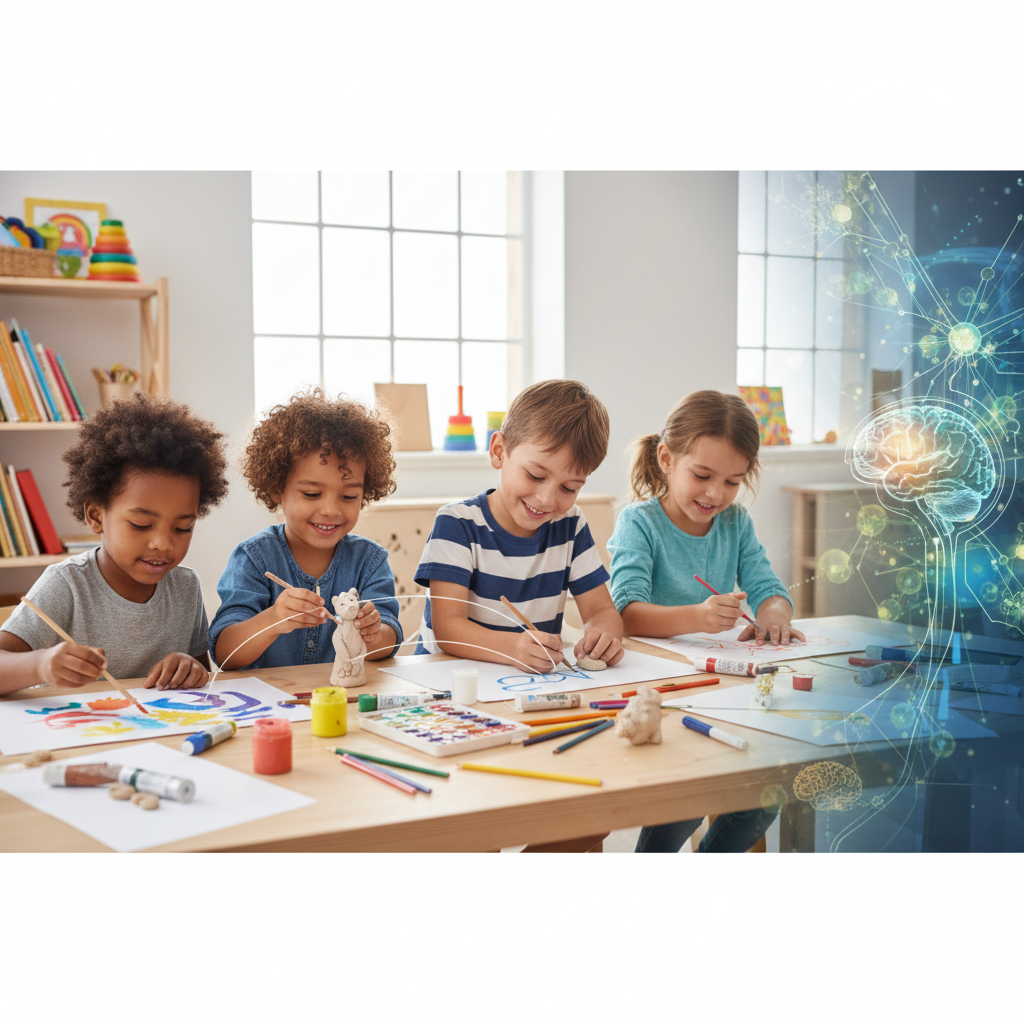
Far from being a "soft" skill, creativity in children is deeply rooted in neuroscience. When children engage in artistic activities, they activate neural networks that span both hemispheres of the brain, strengthening connections that support not only artistic expression but also academic performance, emotional regulation, and social competence. Understanding the science behind creativity and brain development empowers parents and educators to prioritize art in children's lives.
What Happens in the Brain During Creative Activities
Neuroscientist Dr. Rex Jung of the University of New Mexico has mapped the brain activity associated with creative thinking. His research using fMRI scans reveals that creativity engages the default mode network (imagination and daydreaming), the executive attention network (focus and evaluation), and the salience network (switching between the two). This three-network dance is unique to creative activity and becomes more sophisticated with practice.
When a child draws a picture, their brain simultaneously processes visual information, plans motor movements, makes aesthetic decisions, and draws on memory and imagination. This multimodal activation strengthens neural pathways more effectively than single-domain activities like memorization or repetitive drills.
Art and Academic Performance
A ten-year study by the National Endowment for the Arts tracked over 25,000 students and found that those with high arts involvement were three times more likely to earn a bachelor's degree and four times more likely to be recognized for academic achievement. The correlation held across all socioeconomic groups, suggesting that art's benefits are universal rather than a byproduct of privilege.
Dr. Ellen Winner of Boston College, a leading researcher on arts education, explains that art develops transferable cognitive skills: attention to detail, pattern recognition, persistence through frustration, and the ability to envision multiple solutions to a single problem. These skills directly support performance in mathematics, reading comprehension, and scientific inquiry.
Creativity and Emotional Intelligence
Artistic expression provides children with tools for processing emotions they may not yet have words to describe. A child who cannot articulate anger might paint it in bold red strokes. A child processing anxiety might sculpt something they can physically reshape and control. The American Art Therapy Association cites extensive research showing that creative activities reduce cortisol levels (the stress hormone) in children by up to 75 percent within 45 minutes of engagement.
Dr. Daisy Fancourt of University College London has documented that regular creative activity in childhood builds emotional resilience, the ability to recover from setbacks and adapt to challenges. Children who create art regularly develop a growth mindset, understanding that skill improves with practice and that mistakes are part of the process, not evidence of failure.
The Critical Window: Ages 3 to 8
While creativity can be developed at any age, neuroscience research highlights ages 3 to 8 as a particularly sensitive period. During this window, the brain exhibits high neuroplasticity, meaning experiences shape neural architecture more powerfully than at later ages. Children exposed to regular creative activities during this period build denser neural networks in areas associated with divergent thinking, the ability to generate multiple solutions to a problem.
Conversely, Dr. Kyung Hee Kim of the College of William and Mary has documented a "creativity crisis" in American children, with scores on the Torrance Tests of Creative Thinking declining since 1990. She attributes this to increased standardized testing, reduced recess and art time, and excessive screen use, all of which favor convergent (single answer) over divergent (multiple answer) thinking.
Practical Ways to Boost Creativity at Home
Provide open-ended art materials rather than prescriptive craft kits. A blank canvas and paints develop creativity more effectively than a paint-by-numbers set. Celebrate the process, not the product. Ask "What was your favorite part of making this?" rather than "What is it supposed to be?" Display your child's art prominently, communicating that creative expression is valued in your family.
Allow messy, experimental play. Creativity requires permission to take risks and make mistakes. Set up a designated art area where mess is acceptable, reducing the stress that inhibits creative expression. Expose children to diverse art forms including music, dance, theater, and visual arts. Each modality activates different neural pathways, and variety strengthens the overall creative network.
Art in the Digital Age
Digital art tools can complement traditional media but should not replace them. Physical art activities engage tactile and proprioceptive senses that screens cannot replicate. The fine motor control required for painting, sculpting, and drawing develops hand strength and coordination that supports handwriting and tool use. When introducing digital art, ensure it supplements rather than substitutes hands-on creative play.
Frequently Asked Questions
My child says they are not creative. How can I help?
Creativity is a skill, not a fixed trait. Children who believe they are "not creative" have often internalized criticism or comparison. Start with low-pressure activities like doodling, collage, or playing with clay. Emphasize experimentation over outcome and avoid comparing their work to others.
Does structured art instruction help or hinder creativity?
Both have a role. Structured instruction teaches technique, while unstructured time allows free expression. The ideal balance is approximately 30 percent instruction and 70 percent free creation, according to art education researchers.
Can too much screen time reduce creativity?
Yes. Passive screen consumption provides ready-made imagery and narratives, reducing the need for children to generate their own. Active screen use such as digital drawing or video creation is less harmful, but physical creative activities remain superior for neural development.
How much art time do children need per week?
Research suggests that three to five sessions of 30 to 45 minutes per week provides significant cognitive benefits. Even two sessions per week shows measurable improvements in creative thinking scores within three months.
Written by
You might also like
 81
81
Best Creative Craft Kits for Kids: Art Projects They'll Actually Finish
Discover the best creative craft kits for kids that they will actually finish. From sculpting and glass painti...
Our Favorite Ways to Bring Love, Peace, and Whimsy Into Your Child's World
From imaginative play sets to calming mindfulness tools, these are our favorite picks that bring love, peace,...
Our Favorite Bring Your Love, Peace, and Whimsy! Toys and Gifts for Kids
Discover 8 whimsical toys and gifts that bring love, peace, and creative wonder into your child's world while...